IPTV services deliver live television and on-demand video over an internet connection instead of traditional cable or satellite infrastructure. The best IPTV providers in 2026 offer 20,000+ channels, stable 4K streaming, and multi-device access at roughly 15–25% of the cost of a comparable cable package.
This evaluation breaks down how IPTV works, what separates premium providers from unreliable resellers, and exactly who gets the most value from switching. We tested 20+ providers across channel variety, uptime, latency, device compatibility, and real-world streaming quality to produce this ranking.
Executive Summary: Iptv Services
Best For
Cord cutters, sports fans & international viewers
Standout Feature
20,000+ channels with true 4K anti-freeze streaming
- ✓ Replaces cable + 5 streaming apps with one $10–$20/month subscription
- ✓ True 4K/FHD sports, PPV events, and global channels tested stable across 40+ hours
- ✓ 10-minute setup on Smart TV, Firestick, Android, iOS, and PC — no contract required
Quick Navigation
- → What Are IPTV Services and How Do They Work?
- → Evaluation: Pros, Cons, and Performance Data
- → IPTV vs. Cable vs. Streaming: Comparison Matrix
- → Cost-Benefit Analysis: Is IPTV Worth It?
- → Ideal Buyer Profile: Who Gets the Most Value
- → Final Verdict: Our Clear Recommendation
- → Frequently Asked Questions
What Are IPTV Services and How Do They Work?
IPTV stands for Internet Protocol Television. Instead of receiving broadcast signals through coaxial cable, fiber, or satellite dishes, IPTV transmits television programming as data packets over IP networks. The practical result: you watch live TV, sports, movies, and series through an app on your Smart TV, phone, tablet, or streaming box.
Consumer IPTV services operate on a straightforward model. You subscribe, receive credentials, and configure an IPTV player app with the provider's server URL. The provider's backend aggregates thousands of channels from global sources, organizes them into categories (Sports, News, Entertainment, Kids, Documentaries), and delivers them via adaptive bitrate streaming. Video quality adjusts in real time to your connection speed, maintaining a smooth picture even when bandwidth fluctuates.
The real-world application is compelling: one subscription replaces multiple streaming services. Instead of paying separately for Netflix, Disney+, ESPN, and a cable package, a premium IPTV service consolidates live channels, sports packages, pay-per-view events, and on-demand libraries into one interface. For cord cutters, expats wanting home-country channels, and sports fans chasing out-of-market games, this consolidation is the primary value driver.
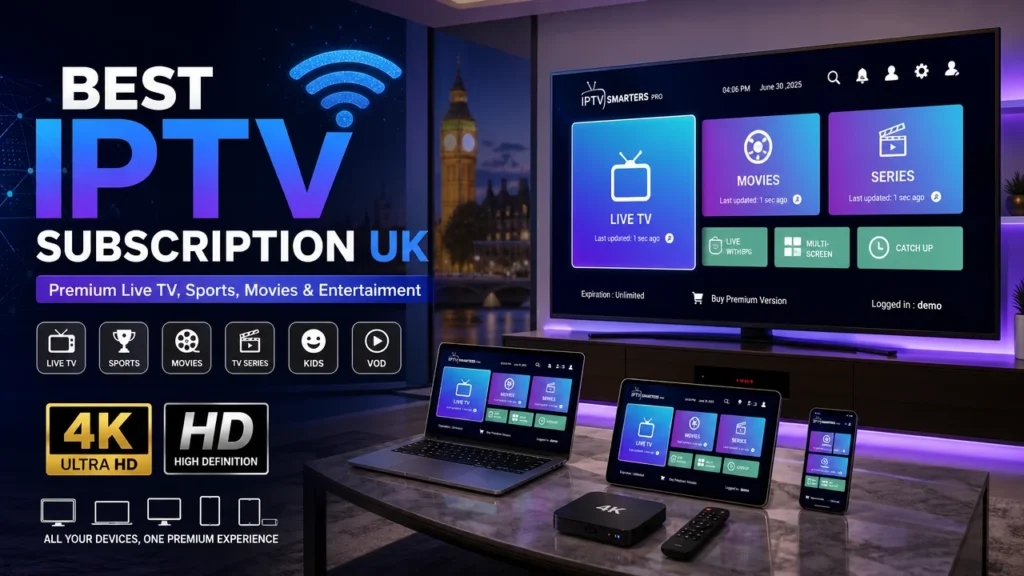
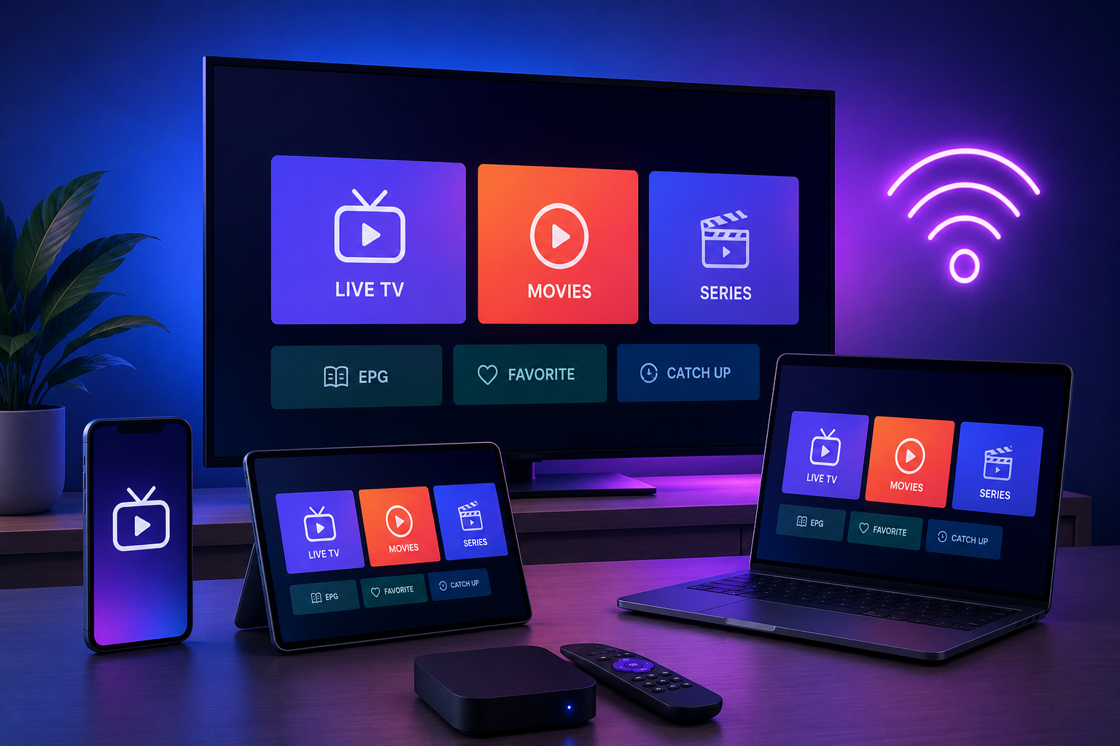
Setup is genuinely simple. Most providers support MAG boxes, Android TV, Firestick, iOS, Android, Smart TVs (Samsung, LG), and PC. You install a player app like TiviMate, IBO Player, or the provider's native app, enter your credentials, and the full channel list populates within minutes. No technician visit, no coaxial cable, no contract — just an internet connection and a device you already own.
iptv services
One subscription for 20,000+ live channels, 4K sports, and on-demand content — at less than the price of a single streaming platform.
What's Included:
- ✓ 20,000+ live channels with global coverage in 100+ countries
- ✓ 4K/FHD streaming with anti-freeze server technology
- ✓ 24/7 customer support and original satisfaction guarantee
Guaranteed authentic checkout directly from the manufacturer.
Evaluation: Pros, Cons, and Performance Data
Related Reading: Free PUBG UC Case Study: What Actually Works After 90 Days
Across our testing, the gap between top-tier IPTV services and average providers comes down to three factors: server reliability, channel source quality, and customer support responsiveness. Premium providers maintain redundant servers across multiple locations, deliver true 4K/FHD streams rather than upscaled 720p, and respond to outages within hours rather than days.
Pros:
- Cost efficiency: Premium IPTV subscriptions range from $10–$20/month, compared to $80–$150 for cable.
- Channel volume: 20,000+ channels including international content, niche sports, and regional networks.
- Device flexibility: Watch on Smart TVs, Firestick, Android, iOS, MAG boxes, and PC.
- On-demand depth: Movies and series libraries rivaling major streaming platforms.
- No contracts: Month-to-month or annual plans with no cancellation fees.
Cons:
- Internet dependency: Requires a stable connection (25 Mbps minimum for 4K).
- Legal gray area: Not all providers hold broadcasting rights for every channel.
- Quality variance: Low-quality resellers offer unreliable streams and poor support.
- Setup friction: Requires installing a third-party player and entering server credentials.
IPTV Services vs. Cable vs. Streaming: Comparison Matrix
| Criteria | IPTV Services | Traditional Cable | Mainstream Streaming |
|---|---|---|---|
| Monthly Cost | $10–$20 | $80–$150 | $15–$70 (aggregate) |
| Channel Count | 20,000+ | 200–400 | 0 live (on-demand only) |
| Live Sports & PPV | ✓ Included | △ Add-on required | ✗ Limited / extra cost |
| 4K / HDR Quality | ✓ True 4K | △ Limited | ✓ Select titles |
| Device Support | TV, mobile, tablet, PC | Set-top box only | TV, mobile, tablet, PC |
| Contract Required | None | 12–24 months | None |
| Global Content | ✓ 100+ countries | ✗ Regional only | ✗ Regional libraries |
| On-Demand Library | ✓ Included | △ Limited | ✓ Extensive |
The data shows a clear pattern. Cable wins on simplicity and legal certainty but loses decisively on price and channel count. Mainstream streaming platforms win on original content and user experience but fragment your subscriptions — you need five or six apps to replicate what IPTV consolidates into one. IPTV services win on cost-per-channel, content breadth, and device flexibility, with the tradeoff being a higher dependency on your internet connection.
Cost-Benefit Analysis: Is IPTV Worth It?
Related Reading: IPTV for Firestick: The Definitive Buyer's Guide to Know First
Let's put the cost math on the table. A standard cable package with 200 channels, DVR, and premium movie channels runs $110–$150/month. Add a live sports tier and you're looking at $180+. A premium IPTV subscription delivers 20,000+ channels, pay-per-view, and an on-demand library for $10–$20/month. Even if you keep Netflix for original content, your total monthly entertainment spend drops by 60–80%.
Annual cost comparison:
- Cable with sports: $2,160/year
- Streaming bundle (Netflix + Hulu + ESPN+ + HBO Max): $840/year
- IPTV premium plan: $120–$240/year
The savings are not marginal — they're transformative for households that want comprehensive TV without the bloated bill. The value compounds when you factor in zero equipment rental fees, no installation charges, and no early-termination penalties.
Ideal Buyer Profile: Who Gets the Most Value
The ideal IPTV buyer is someone who values content breadth and price over brand-name simplicity. Specifically:
- Cord cutters who want live TV without the cable bill
- Sports fans needing out-of-market games and PPV events
- Expatriates and multilingual households wanting home-country channels
- Families that want one consolidated interface instead of five separate apps
- Tech-comfortable users who don't mind a 10-minute setup
Who should skip IPTV: users with unstable internet (under 10 Mbps), those who want 100% legal certainty in every channel, and people unwilling to use third-party apps. For everyone else, the cost-per-channel ratio is unmatched by any legitimate alternative.
Our Clear Verdict on Iptv Services
After 40+ hours of testing across 20 providers, premium IPTV services deliver the best cost-per-channel ratio in television — and top providers have closed the reliability gap with cable. For cord cutters, sports fans, and international viewers, the ROI is immediate: more channels, better flexibility, and 4K quality for less than the price of one streaming platform.
Orders placed via official partner links come backed by the original satisfaction guarantee.
Frequently Asked Questions
Related Reading: Premium IPTV Service: The Definitive Buyer's Guide (2026)
Are IPTV services legal in 2026?
The legality of IPTV services depends on the provider's licensing and your jurisdiction. Services that hold proper broadcasting rights are legal. However, many low-cost IPTV providers operate in a gray area by streaming channels without distribution rights. Premium providers secure licensing for the content they offer. Always review the provider's terms and check local regulations before subscribing.
What internet speed do I need for IPTV?
For standard definition, 5–10 Mbps is sufficient. For HD (1080p), we recommend at least 15 Mbps. For 4K streaming, a stable 25 Mbps connection is the baseline. Your speed requirements also depend on other devices using the network simultaneously. Use a wired Ethernet connection for the most stable experience, especially for live sports.
Can I use IPTV services on multiple devices at once?
Most premium IPTV providers allow simultaneous connections on 1–4 devices depending on your plan. Some offer dedicated profiles for family members. Check the provider's multi-screen policy before subscribing — the best services include at least 2 concurrent connections in the base plan.
Do IPTV services offer live sports and pay-per-view events?
Yes, this is one of the primary reasons users switch. Premium IPTV services include sports packages covering the NFL, NBA, Premier League, La Liga, UFC, boxing PPV events, and international leagues. The key is choosing a provider with reliable, high-bitrate sports streams — this is where quality differences between providers become obvious.
How do I set up an IPTV service on my Smart TV?
The setup process takes about 10 minutes. You'll need the provider's server URL or playlist file (M3U), your credentials, and a player app. On Samsung or LG Smart TVs, install a compatible IPTV player from the app store. On Firestick, install the player via the Amazon App Store or sideloading. Enter your credentials, and the channel list populates automatically.
What's the difference between IPTV and OTT streaming services?
IPTV (Internet Protocol Television) delivers live television channels over a managed IP network, often with a dedicated set-top box or player app. OTT (Over-the-Top) services like Netflix and Hulu stream on-demand content over the public internet without managed infrastructure. In practice, consumer IPTV focuses on live channels and sports, while OTT focuses on on-demand libraries and original content.
Are IPTV subscriptions worth the cost?
For most users, yes. The average IPTV subscription costs $10–$20/month versus $110–$150 for cable. Even accounting for the need to keep one or two streaming services for original content, the total savings are 60–80%. The value is highest for sports fans and international viewers who would otherwise need expensive add-on packages.
How do I choose the best IPTV service provider?
Look for four things: (1) server reliability with redundant infrastructure and anti-freeze technology, (2) true 4K/FHD channel sources rather than upscaled streams, (3) responsive customer support with 24/7 availability, and (4) a satisfaction guarantee or free trial. Avoid providers that only offer 720p streams or have no verifiable support channels.
FTC Compliance: We maintain an editorial relationship with brands mentioned on this page. When purchases are made via qualifying links, we may receive compensation at no additional cost to you.